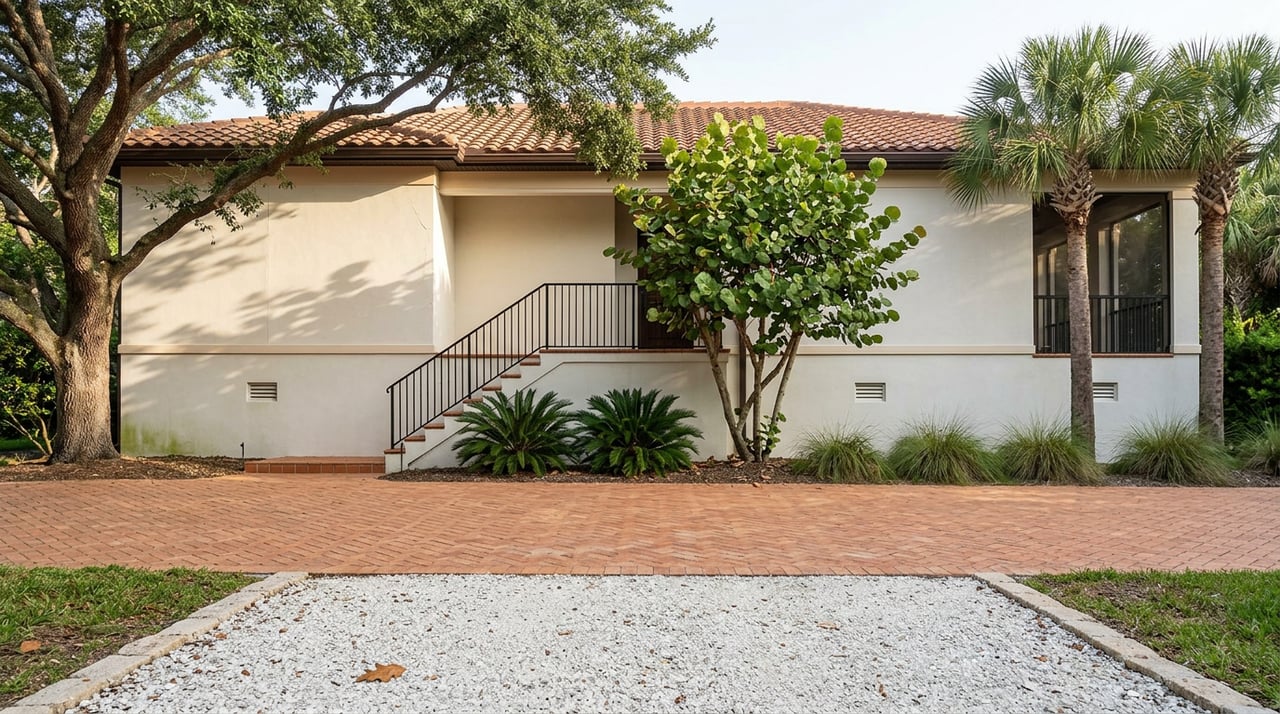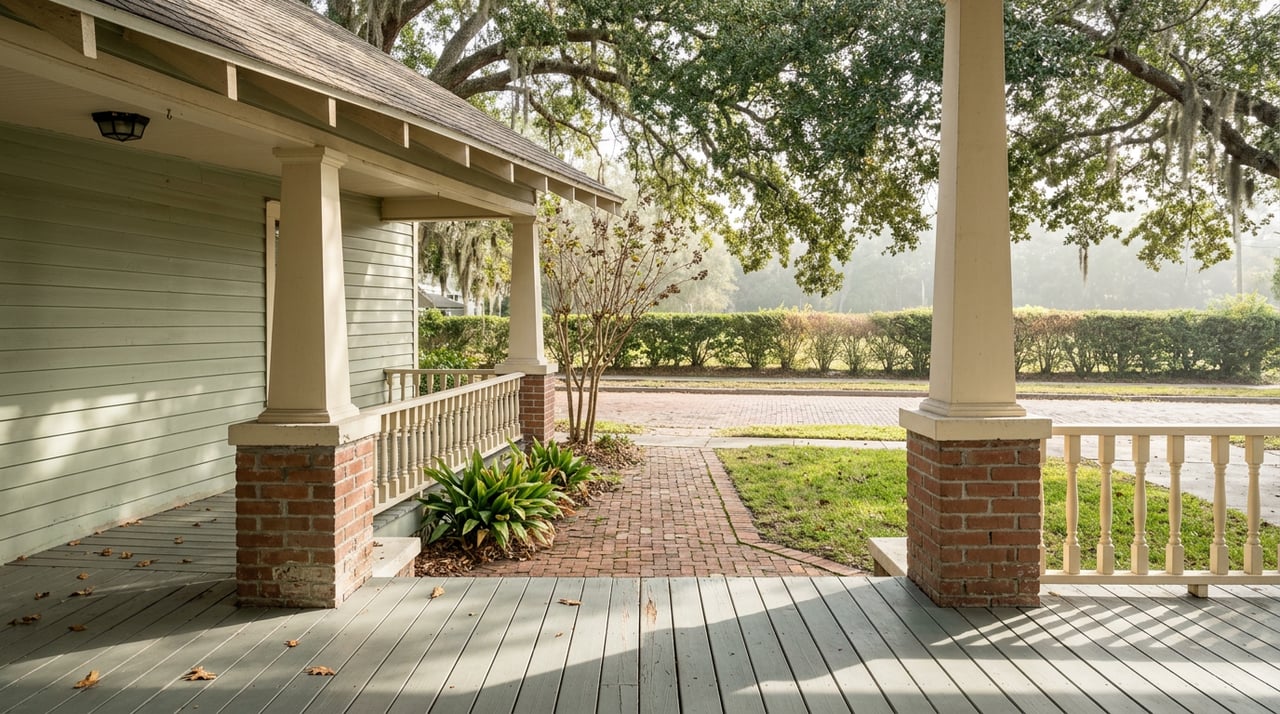
For seven years, the yellow bungalow at 1225 Dr. Martin Luther King Jr. Street North ran as Left Bank Bistro, a French-inspired spot two blocks north of Hook's that built a following on coffee, pastries, and cocktails in a converted 1920s home. It closed last fall. That part of the story is ordinary. Restaurants in old houses close all the time, and Historic Uptown has watched plenty of storefronts change hands over the years without much fuss.
What happened next is not ordinary, and it says more about this neighborhood than the food will.
Chef Jeremy Duclut, who already runs Wooden Rooster in downtown St. Pete and operates the original Marcel in Sarasota, is opening a second Marcel location in that same building. Nothing unusual there either. Chefs expand. What makes this one different is how he got the keys. He didn't sign a lease. He bought the building outright.
Duclut has opened restaurant after restaurant across Tampa Bay, and every one of them has been a tenancy. This is his first as owner of the real estate underneath it.
"This is the first restaurant I've owned the building for."
That single sentence is the actual news here. A tenant can walk away when a lease ends. An owner has made a bet that outlasts a five-year term, on a specific corner, in a specific neighborhood he chose over every other pocket of St. Pete he could have picked. For residents, the practical difference is simple: a leased restaurant is a guess about how long it stays interesting. An owned one is a commitment to the block itself.
That distinction, staying versus passing through, turns out to be the pattern running underneath Historic Uptown's whole civic life this year, not just its restaurant scene.
The association nobody has to join, that everyone somehow does
Historic Uptown doesn't have a homeowners association in the gated-community sense, the kind with covenants and violation letters. It has the Historic Uptown Neighborhood Association, HUNA, a volunteer group formed in 2002 that every resident, renter, and business owner within the boundaries is automatically part of, whether they ever attend a meeting or not.
Those meetings happen quarterly, on a Thursday evening at 7 p.m., at Gypsy Souls Coffeehouse on Dr. MLK Jr Street North. There's no formal enforcement mechanism behind any of it. What holds the association together instead is a set of small, repeated transactions between neighbors and the businesses on their own streets. HUNA members carry a keytag that gets them 10 percent off a beverage order at Uptown Eats, 10 percent off pizza on Thursdays at Flatbread & Butter, a Tuesday discount at The Bier Boutique, a standing discount at Gypsy Souls itself, and a break on purchases at Wilson's Book World. None of this moves real money. What it does is give residents a reason to walk into the same five storefronts on purpose, month after month, instead of drifting toward whatever chain opens on 4th Street next.
It's a modest system. It's also one that requires actual continuity to function. A discount program only means something if the businesses honoring it are still there next year, which loops right back to why a chef buying his building instead of renting it matters to the person living three blocks away and not just to Duclut's accountant.
A porch idea that turned into a decade
The clearest proof that small, personal commitments in this neighborhood tend to calcify into permanent fixtures is the Mardi Gras Block Party, which marked its tenth year this past February on the 700 block of 5th Street N.
It didn't start as an institution. It started with one resident. After years spent working in and around New Orleans in the post-Katrina rebuilding effort, a man named Jess Flanery moved into Uptown near his parents and, sitting on their porch one afternoon, decided the neighborhood needed a taste of the city he'd fallen for. The first party happened in 2017. Nine years later it's still running, on a Saturday out of deference to working families, with live music, Cajun food from Bayou Catering available for a small donation, and free pizza on hand for pickier kids.
The party has absorbed itself into the neighborhood's actual life in ways that go past the calendar date. Flanery and his wife Jess, who co-founded the event with him, got married during the 2020 block party at the adjacent Round Lake Park, and their wedding guests processed straight from the ceremony into what doubled as their reception, with the Gibbs High School Second Line leading the way. Co-organizers Denielle Kennett, Dianne d'Ambrosio, and Joe Kennett have carried the event alongside them ever since. A single person's idea on a porch became a fixture that a neighborhood now organizes a piece of its year around, the same trajectory a good restaurant follows when a chef decides to own the building instead of just occupying it.
The smaller version of the same thing, this July
Not every piece of neighborhood infrastructure needs a decade to prove itself. In July, HUNA ran its second annual Ladders & Lemonade event, and more than 55 neighbors showed up for an afternoon that ran from 3:30 to 5 p.m. Three firefighters from St. Petersburg Fire Rescue Station 1 brought a truck out for kids and families to climb through, and while they were there they mentioned something residents might not otherwise think about: Station 1 and Station 4 both cover Uptown, and most of the calls they run in this neighborhood are medical emergencies rather than fires, which is part of why the department offers CPR classes through its Fire Rescue Outreach team for anyone who wants to learn. Neighbors got pink lemonade and ice pops. HUNA, as a thank-you, is delivering a case of LMNT electrolyte packets to the station after the crew mentioned they'd become a favorite around the firehouse.
None of that is dramatic. It's also exactly the kind of detail a neighborhood accumulates when the people running it plan to still be running it next summer.
What actually ties this together
Historic Uptown doesn't hold its shape through zoning overlays or a strict architectural review board, even though the historic designation does put real limits on exterior changes for the homes here. It holds together through a string of decisions, one chef buying a building instead of leasing it, one association handing out coffee discounts that only work if the coffee shop is still open, one couple's porch idea reaching its tenth Saturday, one afternoon with a fire truck that's now in its second year, that all point the same direction. People here keep choosing to stay rather than pass through, and each time they do, the next person's decision to stay gets a little easier to make.
That's not a story you'll find on a listing page, and it's not something a walk score or a median price captures. It's the kind of thing you only notice by paying attention to who's still around a year later, and by that measure, Historic Uptown is having a good year.
If you're weighing a move into this neighborhood, or you already live here and want a read on what a specific block or bungalow is actually worth in today's market, Judy Anderson knows these streets well enough to tell you the difference between a listing photo and the real thing. Let's Connect.